
Waste Management
Waste Management
We measure, manage, and monitor both hazardous and non-hazardous waste in line with applicable legal and regulatory requirements.
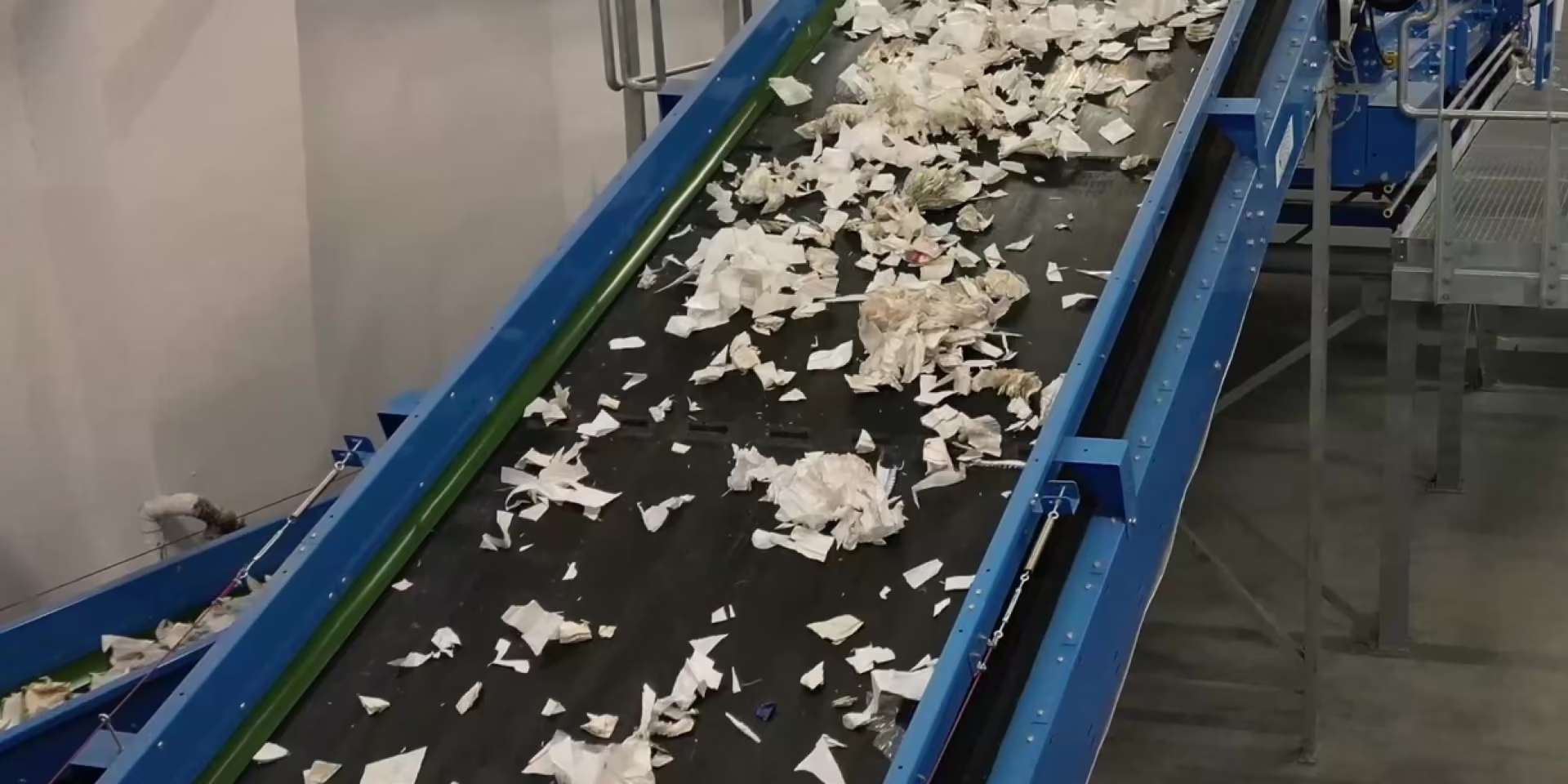
At FPS, we are committed to reducing operational waste and aim to achieve zero waste-to-landfill across all sites. We measure, manage, and monitor both hazardous and non-hazardous waste in line with applicable legal and regulatory requirements.
Waste is carefully separated at source by type such as glass, paper, plastics, contaminated materials and recyclable items are sent for recycling. Materials like wood, metal, and plastic are reused when applicable. Post-industrial scraps are seamlessly reintegrated into our production cycle from extrusion to confection ensuring that clean, in-plant waste is recovered and reused.
This approach not only supports our zero-waste to landfill commitment, but also reflects our ability to close the loop within our own operations. Through our integrated PIR (Post-Industrial Recycled) process, we significantly reduce landfill dependency while maintaining strict hygiene and safety standards required for sensitive applications.
We have implemented a comprehensive mapping of waste streams across all our operations. This process allows us to identify, categorize, and manage waste efficiently, ensuring that we minimize environmental impact and enhance resource recovery.
By systematically mapping waste streams, we can better track our waste management practices and continuously improve our sustainability performance.
Hazardous waste is managed in strict accordance with regulatory standards, including proper labeling, storage, and transportation. FPS collaborates with licensed partners for the disposal of hazardous and electronic waste and restricts the transboundary movement of such materials to reduce environmental and health risks.
Our policies ensure compliance with international regulations, promote safe and environmentally sound waste management practices, and prevent the illegal trafficking of hazardous materials. By adhering to these measures, we aim to protect both local and global ecosystems.
Colleague training is provided to raise awareness on sustainable waste management. Single-use plastics are avoided, and reusable options such as glass bottles and ceramic cups are encouraged across sites.
FPS is steadily moving toward its zero-waste-to-landfill goal. As of 2025, 11 out of 13 FPS plants have already achieved this status.
In Türkiye, all three plants have received zero-waste government certification. Each plant continues to monitor waste metrics and explore innovative reuse opportunities to minimize landfill disposal.
Actions and Initiatives
FPS applies a “learn from the best” approach by encouraging communication and collaboration among plant managers worldwide.
Representatives from Operational Excellence (OpEx) and the Health & Safety team meet monthly to select and roll out best practices. During project implementation, bi-weekly calls are held to track progress and ensure alignment across sites.
Through research, innovation, and product design, we optimize our products to create new features that minimize raw material content. We have implemented manufacturing processes that consume less energy and water.
These efforts have allowed us to reuse 241 tons of waste throughout our global operations and recycle 4,560.22 tons of waste.
In 2025, 177.60 metric tons of waste were sent to landfill, which is about 2.4% of the total waste generated.
FPS promotes circularity through its REBU service, which reconditions FIBCs by collecting, cleaning, inspecting, and returning them to customers for reuse. This program reduces waste and supports landfill diversion.
We achieved a 95.06% reduction in the total amount of hazardous waste produced compared to 2022 baseline year.
LEGAL DISCLAIMER
This Sustainability Report, reflecting FPS’ current sustainability initiatives and targets, has been developed based on information available at the time of preparation and is provided for informational purposes only as of the date of publication. This report contains statements regarding current expectations, objectives, plans, and future developments related to sustainability matters. Such statements are based on information, assumptions, and circumstances existing at the time of publication and may change over time due to evolving conditions and circumstances beyond the control of FPS. While FPS aims to present accurate and up-to-date information, no representation or warranty, express or implied, is made regarding the completeness, accuracy, or reliability of the information contained herein. Certain figures and data may be subject to rounding or future revision. Unless expressly stated otherwise, nothing in this report shall constitute a legally binding obligation, representation, warranty, or commitment by FPS. This report should be read together with FPS’ policies and applicable legal and regulatory requirements.