
Sustainable Products and Circularity
Sustainable Products and Circularity
Our sustainable product strategy focuses on reducing dependence on virgin materials, integrating recycled content, extending product life through reuse, and maximizing recyclability at the end of use.
We are committed to designing products that not only meet stringent technical requirements but also contribute to the global transition toward a circular economy.
Our sustainable product strategy focuses on reducing dependence on virgin materials, integrating recycled content, extending product life through reuse, and maximizing recyclability at the end of use. Each of these pillars supports our goal to transform flexible industrial packaging into a circular system that minimizes environmental burden while delivering high-performance solutions to our customers.
In developing circular products, FPS carefully evaluates the appropriateness of recycled content for each application. While high levels of PCR and PIR are prioritized where technically and legally feasible, their use is restricted in sensitive sectors such as pharmaceutical, food-contact and UN packaging.
All materials used in these applications undergo comprehensive risk assessments to ensure regulatory compliance, product safety, and long-term performance.
Circular economy principles are embedded across FPS’s value chain. We apply these principles not only in product development and recycling infrastructure but also in upstream activities such as material sourcing, supplier management, and compliance with emerging regulatory frameworks.
Our key business activities related to circularity include:
Raw material sourcing
Use of recycled content
Supplier evaluation and due diligence
Circular product design
Big bag manufacturing
Lifecycle extension through reuse
In-plant waste management
Logistics optimization
Regulatory compliance tracking
Where appropriate, FPS integrates PIR materials derived from internal waste streams into its products to enhance material efficiency.
These applications are carefully evaluated to ensure they meet industry standards and customer requirements. In cases involving food and pharma applications, the use of such materials is restricted to ensure full compliance with quality, health, and safety standards.
FlexiGreen
FlexiGreen represents FPS’s flagship sustainable product innovation. Developed to combine technical reliability with environmental integrity, FlexiGreen FIBCs incorporate a minimum of 30% post-consumer recycled (PCR) content while maintaining the same strength, reusability, and product handling safety as those made from virgin resin.
Manufactured using high-purity, traceable regranulate produced at our in-house Recycling Hub, FlexiGreen bags meet all ISO 21898 standards for flexible intermediate bulk containers. FPS Flexibles Romania became the first plant in the FIBC industry to receive the RecyClass Recycled Content Traceability Certificate for FlexiGreen FIBCs, demonstrating certified use of recycled materials and ensuring transparent communication to our customers.
For more detailed information about the RecyClass Recycled Content Traceability Certificate, please click here.
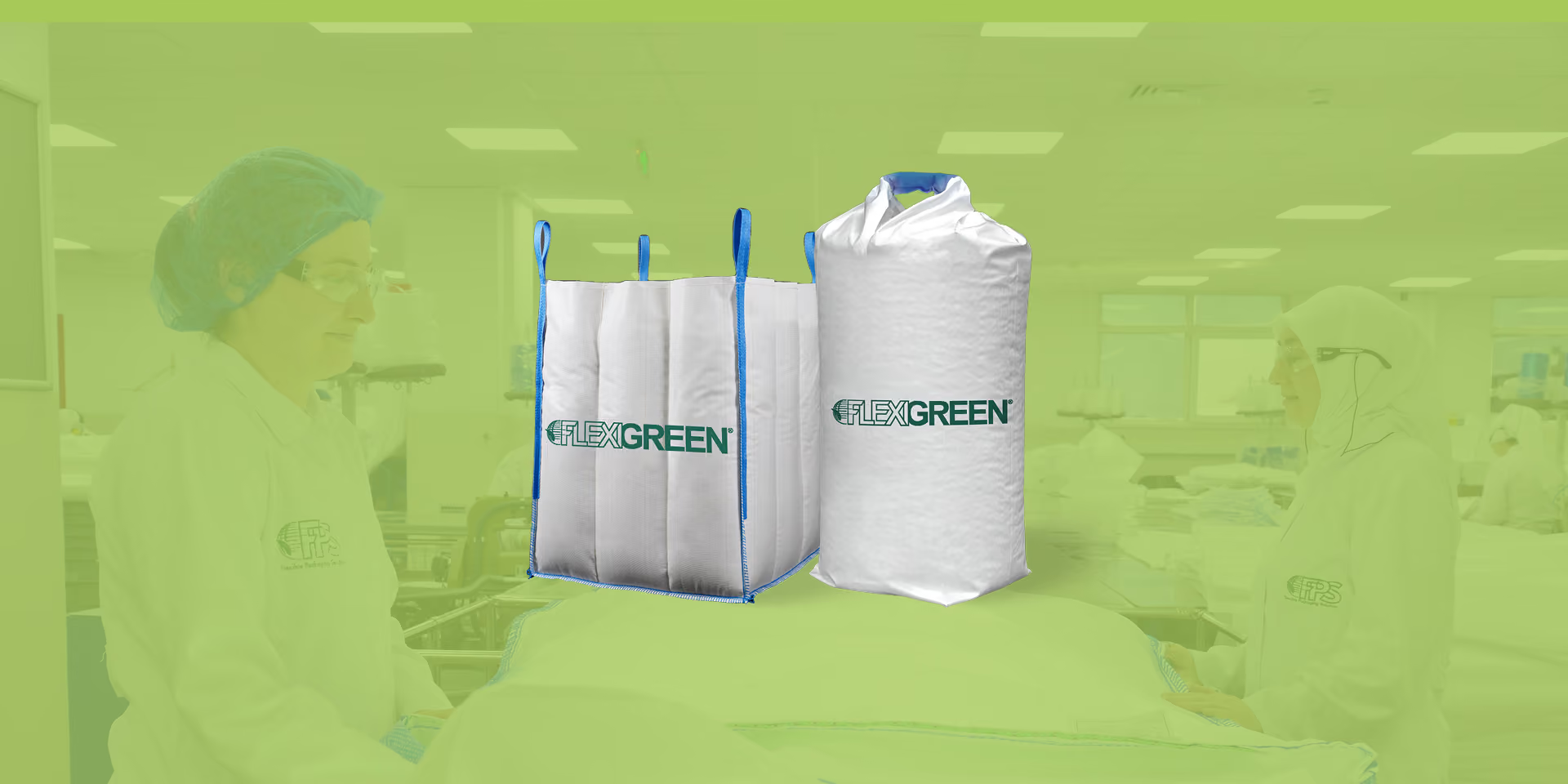
FlexiGreen delivers both environmental and economic value.
Internal analysis confirms that each FIBC made with 30% recycled content reduces carbon emissions by up to 15% over its lifecycle.
These bags are generally exempt from plastic packaging taxes in jurisdictions like the UK and Spain, offering a cost advantage alongside environmental benefits.
By utilizing post-consumer big bags as the main feedstock, FlexiGreen contributes directly to landfill diversion and closed-loop material recovery.

Supporting Customers Through PPWR Webinars and Action
As the EU Packaging and Packaging Waste Regulation (PPWR) continues to reshape the packaging landscape, FPS has taken a proactive role in supporting customers and partners in understanding and preparing for these changes.
In 2025, FPS organized two dedicated PPWR webinars, bringing together customers, industry experts, and internal stakeholders to provide clear, practical insights into the regulation and its implications for industrial packaging. These sessions focused on key topics such as recyclability requirements, reuse targets, labeling obligations, and the increasing role of post-consumer recycled (PCR) content.
Beyond knowledge sharing, these webinars served as a platform for dialogue—enabling customers to raise questions, share challenges, and explore solutions together with FPS’s technical experts. This interactive approach strengthened collaboration and helped translate regulatory complexity into actionable steps.
Building on these engagements, FPS has taken concrete actions to support PPWR readiness across its product portfolio and value chain. These include advancing design-for-recycling principles, expanding reuse and reconditioning models such as REBU, increasing the integration of recycled materials, and enhancing internal capabilities to assess product compliance.
Through these initiatives, FPS not only strengthens its own regulatory readiness but also supports customers in navigating PPWR requirements, reinforcing its role as a trusted and forward-looking partner in the transition toward more sustainable and circular packaging solutions.
LEGAL DISCLAIMER
This Sustainability Report, reflecting FPS’ current sustainability initiatives and targets, has been developed based on information available at the time of preparation and is provided for informational purposes only as of the date of publication. This report contains statements regarding current expectations, objectives, plans, and future developments related to sustainability matters. Such statements are based on information, assumptions, and circumstances existing at the time of publication and may change over time due to evolving conditions and circumstances beyond the control of FPS. While FPS aims to present accurate and up-to-date information, no representation or warranty, express or implied, is made regarding the completeness, accuracy, or reliability of the information contained herein. Certain figures and data may be subject to rounding or future revision. Unless expressly stated otherwise, nothing in this report shall constitute a legally binding obligation, representation, warranty, or commitment by FPS. This report should be read together with FPS’ policies and applicable legal and regulatory requirements.